Data House Calls
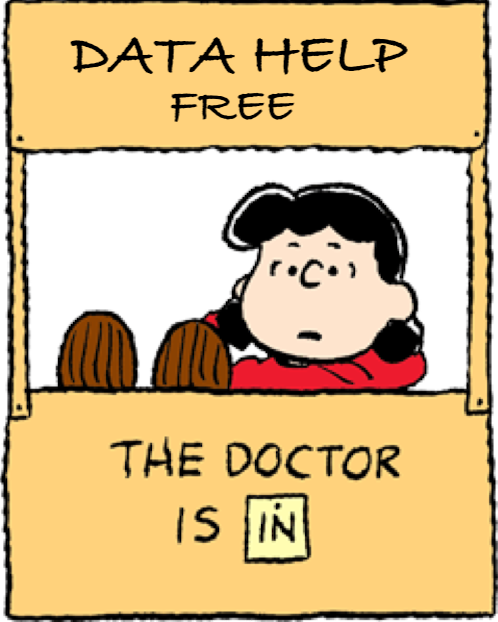
Get support from our staff.
Our Data House Calls are a chance to leverage our staff’s expertise to help you get where you want to go with your data science skills, data management plans and execution, computing needs and beyond. Data House Calls are meant to be topical, focused on solving specific problems or discussing specific topics and function sometimes as a navigation tool to refer people to where they need to go even if we don’t have all the answers.
Fred Hutch and UW Medicine staff can schedule a DHC with typically 1-2 DaSL staff members on a variety of topics.
Note for Fred Hutch staff on our clinical network, the links below may be inaccessible. Please use our public or research networks to book a Data House Call with us.
Translational Project Feasibility
In 2026 we’ll be rolling out net-new multimodal clinical data resources for translational use. This Data House Call is a great way to support getting projects planned that will leverage our resources.
Use this Data House Call to:
-
Discuss your proposed projects,
-
Determine what is feasible now, and what is coming,
-
Learn about what data management, computing and LLM/AI capabilities our platform provides,
-
as well as provide your input on what data sources and types of support you’ll need moving forward.
Schedule this Data House Call.
Translational Data Governance
We provide guidance on accessing and using patient and healthcare data for research in compliance with policies and governance requirements. Topics may include navigating RADaR, disclosure processes for PHI, use of CARDS resources for IRB protocols, and cross-institutional data sharing. Sharing your needs in advance helps us bring in the right experts to address your questions efficiently.
Use this Data House Call for questions about:
-
Support navigating patient data access through RADaR (Research Access to Data Review for Healthcare data),
-
Guidance regarding data governance, data access, disclosure process requirements for Healthcare data (PHI),
-
Information on current policies or processes for appropriate data access, use, and sharing such as CARDS Authorization Letter requests for IRB protocols,
-
Support for gaining access to or using patient data for a different purpose where a governance review of your use case may be required,
-
Questions regarding Consortium data governance and sharing relationships such as UWM and Seattle Children’s.
Schedule this Data House Call.
AI and Research Data Policy
We provide guidance on ethical AI use with patient and research data, research data use agreements, and regulated data stewardship. We can also assist with preparing funding agency data sharing plans, the NIH Genomic Data Use Certification process, and genomic data stewardship plans.
Use this Data House Call for questions about:
- Artificial Intelligence Review (AIR) support, guidance for use of AI with patient and research data and broadly approved AI use case guidance,
- Get guidance regarding what aspects of our data tools and infrastructure supports your intended work,
- Ask questions about Data Use Agreements and get Regulated Data Stewardship support,
- Ask questions and get help preparing NIH or other funding agency Data Sharing Plans,
- Get guidance on the NIH Data Use Certification Process and assistants with creating a NIH Genomic Data Stewardship Plan.
Schedule this Data House Call.
Using Healthcare Data (OMOP) and Atlas
We support the OMOP database at Fred Hutch, a standardized data model for observational health research, which integrates and harmonizes data from Fred Hutch clinical systems and patients. We are available to help answer questions about what types of data are integrated from various clinical domains, how it is organized, and how to use the standardized vocabularies that are part of the data model. We can also answer questions about using Atlas, a self-service application for exploring OMOP data, and R packages in the OHDSI methods library.
Use this Data House Call to answer questions about OMOP data such as:
- How do I identify a cohort of patients using Atlas?
- Where do I find x data in the OMOP data model?
- How can I find out if my study is feasible using OMOP data?
Schedule this Data House Call.
Using and Uploading to the Fred Hutch cBioPortal
We support the use of the Fred Hutch instance of cBioPortal for both viewing and uploading multidimensional cancer genomics datasets. We also curate the Fred Hutch Molecular Oncology Dataset (MOD) used to populate IRB-approved study datasets upon request on Fred Hutch cBioPortal.
Use this Data House Call for support on topics such as:
- Getting oriented to cBioPortal and its analysis/visualization features
- Understanding the data sources and organization underneath MOD
- Next steps for gaining access to the Fred Hutch instance of cBioPortal
- Uploading and formatting your own study data for the Fred Hutch instance
- Requesting public datasets you’d like added to the instance
Schedule this Data House Call.
Working with Data in Databricks
Our newest data, AI and computing application for translational data use at Fred Hutch is Databricks. As we roll out access and capabilities inside Databricks, we are providing multiple ways to get help in learning how the tools and data available in the application can help you move faster with your research.
Note: All technical issues should first be sent to
cards-help@fredhutch.orgfor triage. If your issue cannot be solved via email, this DHC is for you!
Use this Data House Call in order to ask specific questions about using Databricks at Fred Hutch.
Schedule this Data House Call.
Research Computing and Data Management
We support research data management and scaling up your data analysis using Fred Hutch infrastructure and recommended tools. This includes guidance around where to store your data so you can develop scalable analyses and leverage our computing resources for your work. We often pull in support from Scientific Computing when your questions relate also to infrastructure based on the notes you provide.
Use this Data House Call for questions about how to run your code or analysis more effectively and scale up your work via:
- Using our computing cluster
- Writing and running scientific workflows
- Bioinformatics software and environment management (including Docker!)
- Leveraging Git/GitHub for code management and sharing
- Accessing data in our various storage locations and public datasets such as reference datasets including genome data, common bioinformatic tool reference data sets
- Collaboration and sharing of workflows, environments and large datasets
Or other questions you have that you feel might relate to this topic!
Schedule this Data House Call.
General
Use this Data House Call to discuss how our group can help connect you with the right resources to support your work. For anything that doesn’t fit into the other topics, or if you are unsure of which to pick, this DHC is the one.
Note: this Data House Call is also good for finding out about the status of upcoming resources.
Schedule this Data House Call.